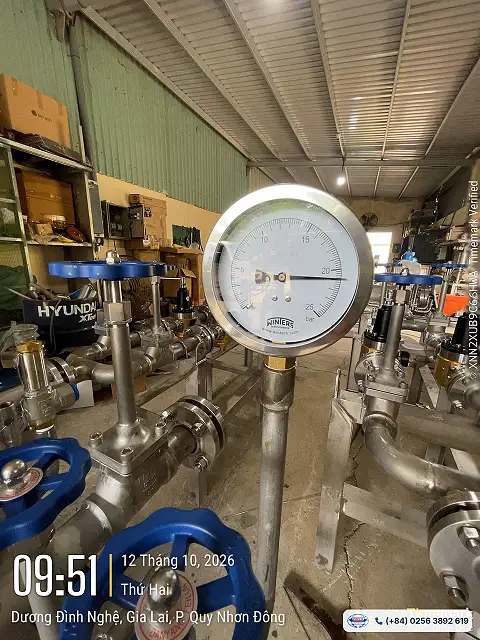

Choosing a pressure regulator for gas cylinders: what you need to know
A pressure regulator brings gas from the high pressure in the cylinder down to a level suitable for the equipment. Choosing the wrong type or using it incorrectly can damage equipment, waste gas and compromise safety.
Gas in cylinders is usually supplied at very high pressure, around 150 – 200 bar, while welding torches, machinery and medical devices only need a low, stable pressure. A pressure regulator is the intermediate device that reduces and holds the outlet pressure at the level required.
Basic structure
- Inlet gauge: shows the pressure remaining in the cylinder.
- Outlet gauge or flow meter: shows the pressure and flow delivered to the equipment.
- Adjusting knob: increases or decreases the outlet pressure.
- The inlet connects to the cylinder valve and the outlet to the hose; many models include a safety valve.
Choose the right type for each gas
- Each gas requires its own pressure regulator; never use an oxygen regulator for flammable gases or vice versa.
- Valves for oxygen must be completely free of oil and grease and made of oxygen-compatible materials.
- CO₂ expands strongly when depressurised, so regulators freeze easily; for high flow rates (such as welding), choose a model with a heater.
- For argon, CO₂ and gas mixtures used in welding, choose a model with a flow meter to set the shielding gas flow accurately.
- The thread and connector type must match the cylinder valve; never improvise, and never use tape or makeshift adapters.

Correct installation and use
- Turn the adjusting knob to the fully released position (zero outlet pressure) before opening the cylinder valve.
- Stand to one side, never directly in front of the gauge face; open the cylinder valve slowly.
- After fitting, check the joints for leaks with soapy water.
- After use: close the cylinder valve, release the remaining gas from the regulator and then back off the adjusting knob.
When should a regulator be inspected or replaced?
- The gauge needle does not return to 0 after the gas is released, or the gauge glass is cracked or broken.
- The outlet pressure keeps rising after the outlet has been closed (the valve is leaking pressure).
- Hissing or leaking at the valve body or joints.
- The regulator has been dropped, hit hard or contaminated with oil or grease (for oxygen regulators).
INSECO supplies gas industry equipment and materials such as cylinder valves, pressure regulators, regulator assemblies and matching accessories. Call our hotline +84 256 3892 619 for advice on choosing the right equipment for your needs.
Need advice on industrial or medical gases?
The INSECO technical team is ready to help and provide a quick quotation.
