Preparing the site before installing a liquid gas storage tank
INSECOAbout 2 min read
The tank location affects safety, installation costs and daily gas deliveries. Basic requirements for location, foundations, tanker access and protective fencing.
When switching from cylinders to liquid gas storage tanks (oxygen, nitrogen, argon, CO₂), site preparation is a crucial first step. A well-chosen location keeps the system safe, makes tanker deliveries easy and avoids costly modifications later.
Tank location
Place outdoors in a well-ventilated area; avoid enclosed rooms, basements or low-lying spots where gas can accumulate.
Maintain safe distances from buildings, windows, air intakes, power lines, ignition sources and storage areas for flammable materials, as recommended by the supplier and required by fire regulations.
Convenient pipeline connection to the areas of use, avoiding overly long pipelines that cause pressure loss.
Foundation and base
A concrete foundation able to bear the load of the tank when full, designed according to the tank size and type.
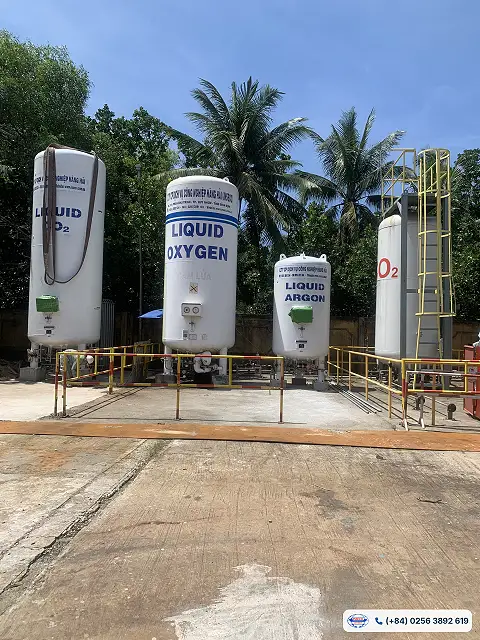
For liquid oxygen tanks, the ground in the tank area and at the tanker parking position during supply must be concrete, not asphalt, because asphalt can ignite violently on contact with liquid oxygen.
The ground drains well, with no standing water around the tank base and vaporiser.
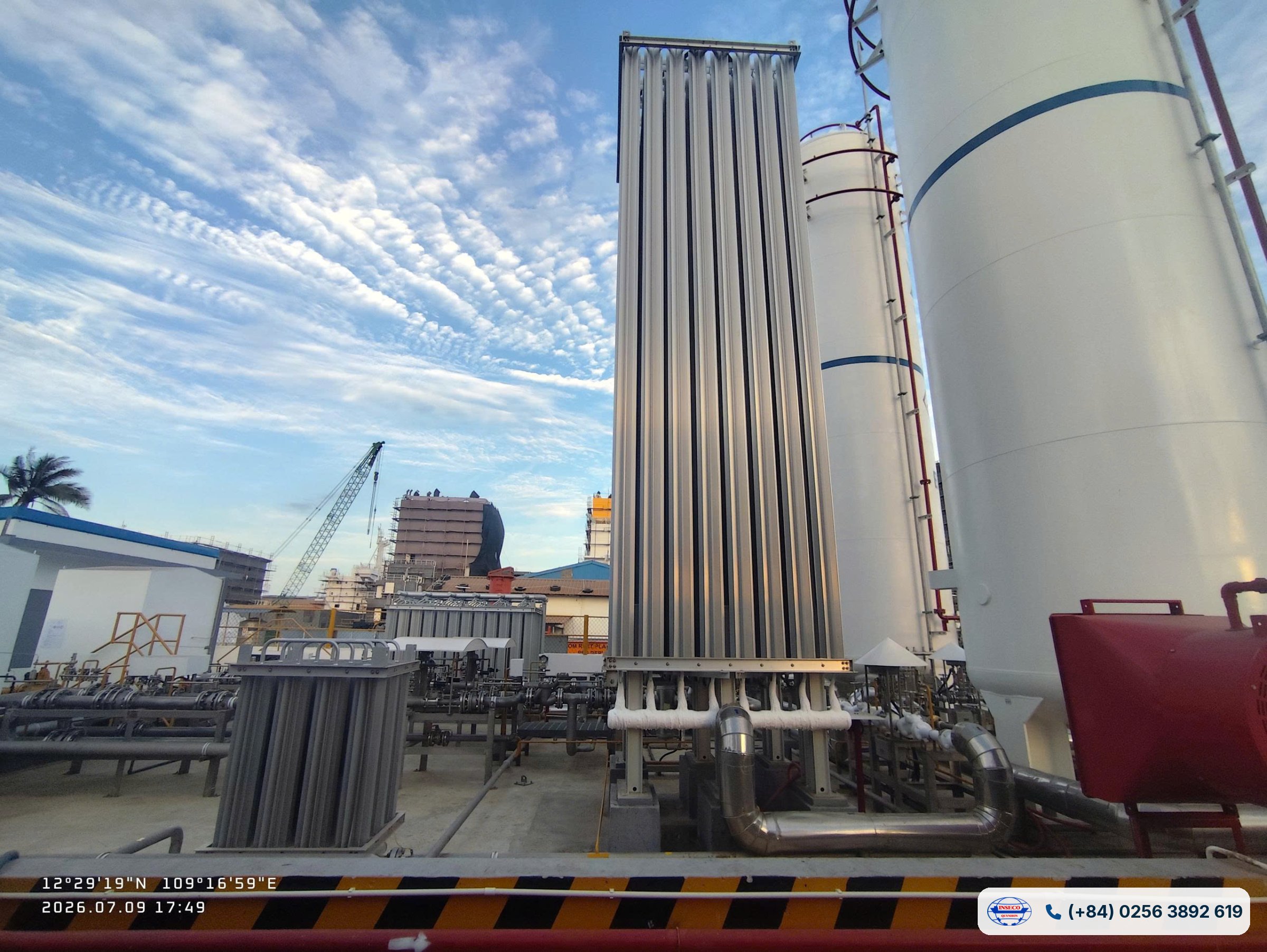
Vaporiser and liquid gas storage tank at a plant
Access for tanker trucks
The access road must be wide enough, with a surface able to bear the tanker's weight and space for the truck to turn or reverse safely.
The distance from the tanker parking spot to the supply point must suit the length of the truck's supply hose.
Do not place the supply point where vehicles or goods often block access.
Fencing, signage and utilities
Protective fencing and lockable gates; only authorised personnel may enter the tank area.
Warning signs, no-flame signs and a board clearly stating the gas stored in the tank.
Adequate lighting for operation and gas deliveries at night.
Fire extinguishers placed within easy reach; power supply for measuring and level-indicating devices (if any).
Specific requirements for clearances and foundation structure depend on the type of gas, tank capacity and current regulations. INSECO's technical team will survey the site and propose a suitable location and installation plan – call our hotline +84 256 3892 619.