What is dry ice? Applications and how to store and use it safely
INSECOAbout 2 min read
Dry ice is solid CO₂, as cold as about -78.5°C, that sublimates directly into gas. This article covers its common applications and the safety rules for using it.
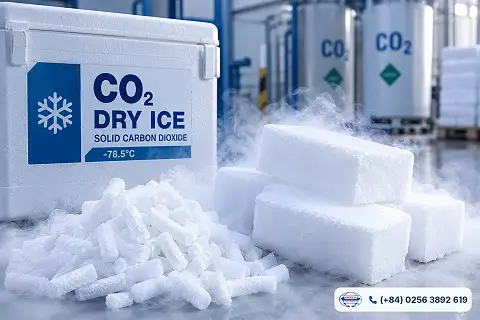
Dry ice is carbon dioxide (CO₂) in solid form, at a temperature of about -78.5°C. Unlike ordinary ice, dry ice does not melt into water but sublimates directly into CO₂ gas, leaving no liquid behind and keeping goods dry and clean.
Common forms of dry ice
Pellets: small size, easy to portion, used for cold storage and industrial cleaning.
Blocks: sublimate more slowly, suitable for long-distance cold transport or extended cooling.
Common applications
Cold storage and transport of food, seafood, laboratory samples and pharmaceuticals.
Industrial cleaning by dry ice blasting: cleans moulds, machinery and equipment without water or chemicals.
Creating cold fog effects for stages, events and restaurants.
Rapid cooling in production and laboratories; shrink fitting of parts in mechanical assembly.
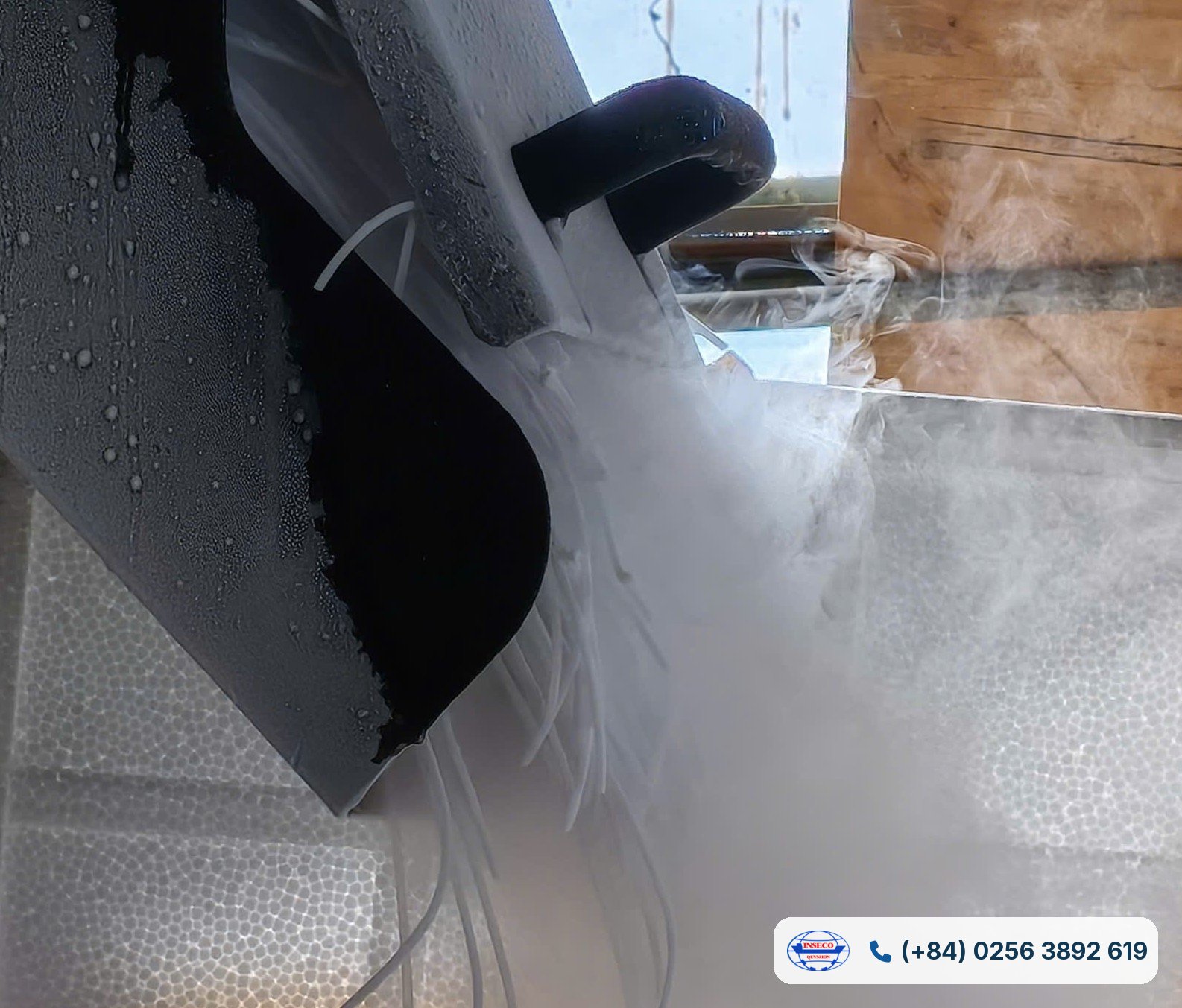
Dry ice pellets giving off cold fog as they sublimate
Store correctly
Store in an insulated container (foam box or dedicated cool box); do not seal it completely so that CO₂ gas can escape.
Do not put dry ice in bottles, jars or sealed boxes: the sublimating gas builds up pressure and can crack the container or blow off the lid.
Place the container in a well-ventilated area, never in an enclosed room, basement or unventilated cold store.
Do not keep it in a household fridge or freezer, as the extremely low temperature can damage the thermostat.
Dry ice gradually diminishes as it sublimates, so take delivery close to the time of use.
Safety notes for use
Wear insulated gloves and safety glasses when handling; never hold it with bare hands as it can cause cold burns.
Never eat, hold in your mouth or swallow dry ice.
When transporting by car, keep the vehicle ventilated and do not leave dry ice in an enclosed compartment with people for long periods.
CO₂ is heavier than air and easily accumulates in low-lying areas: if you feel dizzy or short of breath, move to fresh air immediately.
Keep out of reach of children.
INSECO supplies dry ice in pellets and blocks on request. For advice on quantities and suitable packaging, please call our hotline +84 256 3892 619.