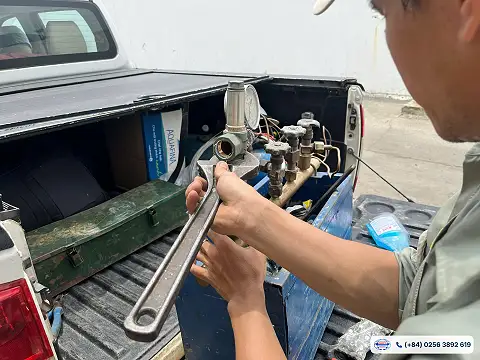

Medical gas system maintenance: items to check regularly
Medical gas systems must run 24/7. Regular maintenance detects leaks, pressure drops and equipment faults early, before they affect patients.
A central medical gas system delivers oxygen, medical air, vacuum and more to every bed, operating theatre and intensive care room. Because it directly affects patients' lives, it must operate continuously and reliably. A planned preventive maintenance programme helps hospitals prevent incidents instead of only reacting to breakdowns.
Supply source area
- Liquid oxygen tanks: check the pressure, liquid level, safety valves and insulation condition (unusual condensation or frost on the tank shell).
- Vaporisers: check the level of icing, the joints and the ability to meet peak-hour flow.
- Backup cylinder manifolds: check the changeover between the two cylinder banks, the pressure gauges and the flexible connecting hoses.
- Medical air compressors and vacuum pumps: service them according to the manufacturer's instructions (filters, oil, air dryers...).
Pipelines and zone valves
- Check for leaks at joints and valves, especially on pipe runs inside ceilings and service ducts.
- Zone valve boxes: valves open and close smoothly, labels clearly show the gas type and the area supplied.
- Pipe supports are secure, and identification labels and pipe colours are still clearly visible.

Alarm systems and outlet points
- Test the high- and low-pressure alarms for each gas; lights and sirens must work.
- Bedside gas outlets connect and disconnect smoothly, without hissing, using the correct connector standard for each gas.
- Check the flow meters, humidifiers and suction units at the points of use.
Records and contingency plans
Each inspection should be recorded in a logbook: date, items checked, results, replacement parts and the person responsible. Hospitals should also have a backup gas supply plan (reserve oxygen cylinders in critical departments) and a response procedure for when the main supply fails.
The specific frequency and scope of maintenance depend on the system design, the equipment manufacturer's recommendations and current regulations. INSECO provides technical services, installation and maintenance of medical gas pipelines and storage tanks – call our hotline +84 256 3892 619 for a site survey and advice.
Need advice on industrial or medical gases?
The INSECO technical team is ready to help and provide a quick quotation.