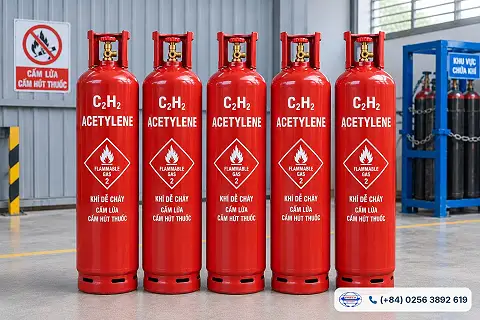

Acetylene (C₂H₂): properties, applications and safety precautions
Acetylene produces the hottest flame when burned with oxygen, so it is widely used for welding and cutting metals. Learn about its properties and the key safety rules to remember.
Acetylene (C₂H₂) is a colourless flammable gas, slightly lighter than air. Commercial acetylene usually has a characteristic garlic-like odour due to impurities. When burned with oxygen, acetylene produces a flame of about 3,100°C, the hottest of all common fuel gases, which makes it the preferred choice for welding, cutting and heating metals.
Why is acetylene stored in dissolved form?
At high pressure, acetylene is unstable and can decompose explosively. That is why it is not compressed directly like oxygen or nitrogen but dissolved in a solvent (usually acetone) absorbed into a porous mass inside the cylinder. This special design allows a large amount of gas to be stored safely.
Common applications
- Gas welding and metal cutting with an oxy-acetylene flame.
- Heating, straightening and surface hardening of metal parts.
- Brazing, copper welding and repairs in engineering workshops, shipyards and plant maintenance.
- Fuel gas for atomic absorption spectrometers (AAS) in laboratories.

Safety rules for use
- Always keep cylinders upright during use and storage so that the solvent is not drawn out with the gas.
- If a cylinder has been lying horizontally (for example during transport), let it stand upright for a while (usually at least 1 hour) before use.
- Do not use pipes, connectors or fittings made of red copper or alloys with a high copper content (over 65%), or silver: they can form explosive compounds with acetylene.
- Fit flashback arrestors on both the oxygen and acetylene lines of the cutting and welding set.
- Open the cylinder valve only about 1 – 1.5 turns so it can be closed quickly in an emergency.
- Do not let the working pressure exceed the recommended limit (usually only about 1 – 1.5 bar).
- Check for leaks with soapy water; never use a flame to test.
- Store cylinders in a well-ventilated place, away from sunlight and heat sources, and separately from oxygen cylinders and oxidising agents.
If an acetylene cylinder becomes unusually hot (after an impact, fire or proximity to a heat source), close the valve if it is still safe to do so, evacuate the area and immediately notify the fire brigade (114) and your supplier. This content is for reference only; always follow the supplier's instructions and current safety regulations.
Need advice on industrial or medical gases?
The INSECO technical team is ready to help and provide a quick quotation.


