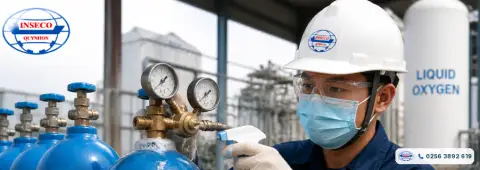

Detecting and handling a leaking gas cylinder: steps to take immediately
Gas leaks can lead to fire, explosion or asphyxiation. Learn the warning signs, simple checks and the safe procedure to follow when you find a leaking gas cylinder.
After a period of use, gas cylinders, valves and pipelines can leak because of ageing seals, loosened threaded joints or damaged valves. The level of danger depends on the gas: flammable gases (acetylene, LPG) carry a fire and explosion risk; oxygen makes materials burn more intensely; while nitrogen, argon and CO₂ do not burn but can displace the oxygen in the air and cause asphyxiation.
Signs of a leak
- A faint hissing sound at a valve, connector or gauge.
- The pressure on the cylinder gauge drops quickly even when not in use.
- An unusual smell (for odorised gases such as acetylene and LPG), or unusual condensation or frost at joints (for liquefied gases and CO₂).
- People in an enclosed area feel dizzy, short of breath or drowsy – signs of oxygen deficiency; leave immediately.
Simple checks
Apply soapy water or a dedicated leak-detection solution to the suspected spot (valve, threaded joint, hose end). Continuous bubbling means there is a leak. Never use a lighter, match or flame to test for leaks. For oxygen, use an oil-free leak-detection solution.
What to do when you detect a leak
- Stay calm, stop work immediately and switch off any nearby flames or heat sources.
- If it can be reached safely, close the cylinder valve or the system's main valve.
- Open doors and increase ventilation; for flammable gases, do not switch electrical devices on or off and do not use any equipment that could create sparks in the area.
- If the leak cannot be stopped, move the cylinder outdoors to a well-ventilated place (when safe to do so) and isolate the area.
- Evacuate anyone not involved; do not re-enter an enclosed area until it has been fully ventilated.
- Mark the faulty cylinder or equipment, stop using it and contact your supplier for inspection and handling.
Prevention from the start
- Check valves, gauges and hoses before each use.
- Use only accessories and seals suitable for each gas; replace them when they become hard or cracked.
- Store cylinders upright in a well-ventilated place, with chains or racks to prevent them from falling.
- For pipeline systems, have leak checks carried out regularly by a qualified contractor.
In the event of a major leak, a fire or anyone suffering from asphyxiation, call the Fire Police on 114 and Emergency Services on 115 immediately. For technical support, please contact INSECO via our hotline +84 256 3892 619.
Need advice on industrial or medical gases?
The INSECO technical team is ready to help and provide a quick quotation.


