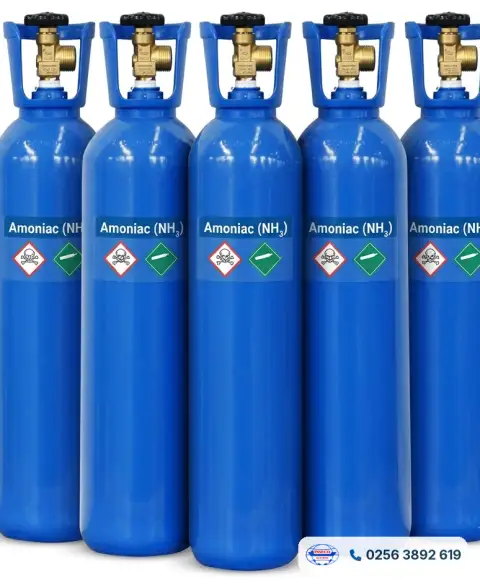

Ammonia (NH₃) in industrial refrigeration: applications and safety precautions
Ammonia is an efficient refrigerant widely used in cold stores, seafood processing plants and ice plants. It is also a toxic gas, so operators need to know the signs of a leak and how to respond safely.
Ammonia (NH₃) is a colourless gas with a very distinctive pungent smell. It is lighter than air and highly soluble in water. Ammonia liquefies easily under pressure, so it is stored as a liquid in pressure vessels. Because it absorbs a large amount of heat as it evaporates, ammonia is one of the oldest and most efficient refrigerants in industry.
Why is ammonia so widely used in refrigeration?
- High cooling efficiency, suited to large systems such as cold stores and blast freezers.
- It does not deplete the ozone layer and has virtually no greenhouse effect.
- Its pungent smell is noticeable even at low concentrations, helping to detect leaks early.
- Low refrigerant cost compared with many synthetic refrigerants.
Common applications
- Refrigerant for cold stores, seafood processing plants, ice plants and food processing.
- Flue gas treatment: removing NOx from boiler and thermal power plant emissions.
- Water treatment and the production of fertilisers and chemicals.
- Nitriding metal surfaces in heat treatment.
Signs of a leak and how to respond
- Signs: a pungent smell, stinging eyes or difficulty breathing around compressors, receivers or pipelines.
- Evacuate people from the area and move upwind.
- Only close valves and isolate the leak when wearing full protective equipment and it is safe to do so.
- For anyone exposed to ammonia: move them to fresh air, rinse eyes and skin with plenty of clean water for at least 15 minutes, then take them to a medical facility.
Operation and storage precautions
- Ammonia is toxic and burns the eyes, skin and airways: wear goggles, gloves and a respirator when handling it.
- Use dedicated valves and fittings; never use copper or copper alloys, which are corroded by ammonia.
- Store vessels in a well-ventilated place away from sunlight and heat sources, and secure them firmly.
- Ammonia can burn when mixed with air at concentrations of about 15% – 28%: keep it away from ignition sources.
- Refrigeration machine rooms should have ventilation, leak detectors and protective equipment ready for use.
Ammonia refrigeration systems must be operated and inspected in accordance with current regulations. INSECO supplies ammonia for industrial refrigeration systems and other plants; vessel options are advised according to each specific need. Call our hotline +84 256 3892 619.
Need advice on industrial or medical gases?
The INSECO technical team is ready to help and provide a quick quotation.


